Weekly Chess
Spring Campus
A focused classroom setting for students across experience levels. Players work through puzzles, guided games, notation, and review at a pace matched to their current board vision.

Classes in Spring & The Woodlands, TX
A game that teaches children to pause, see the whole board, and make better decisions one move at a time.
Enroll Now →What We Develop
Chess is not taught as a ladder of labels. Every student builds the same core habits - board vision, pattern recognition, calculation, planning, and review - with coaching scaled to their experience.
Piece movement, legal moves, check, checkmate, stalemate, notation, and board coordinates. Students learn to see the whole board before chasing a single move.
Pins, forks, skewers, discovered attacks, back-rank threats, and mating nets. Pattern recognition turns chess from guessing into seeing.
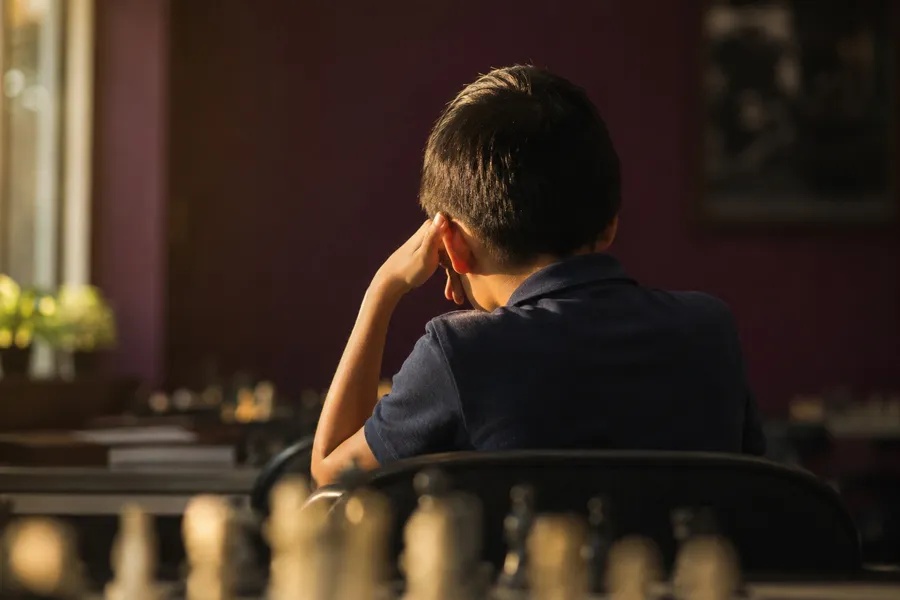
Candidate moves, forcing lines, captures, checks, threats, and quiet moves. Students learn to pause, compare options, and choose with evidence.
Opening principles, piece activity, pawn structure, king safety, weak squares, and endgame goals. Good players do not just find moves - they build positions.

Clock habits, tournament etiquette, full games, notation, review, and resilience after mistakes. The lesson is not over when the game ends.
Beyond the Board
Chess gives students a real competitive language for patience, memory, courage, and decision-making. They do not just learn good moves; they learn how to handle pressure, study mistakes, and keep improving after the board is reset.

Focus Under Pressure
Chess gives students a calm place to practice pressure. The clock is running, the position is changing, and the next move still has to be chosen carefully.
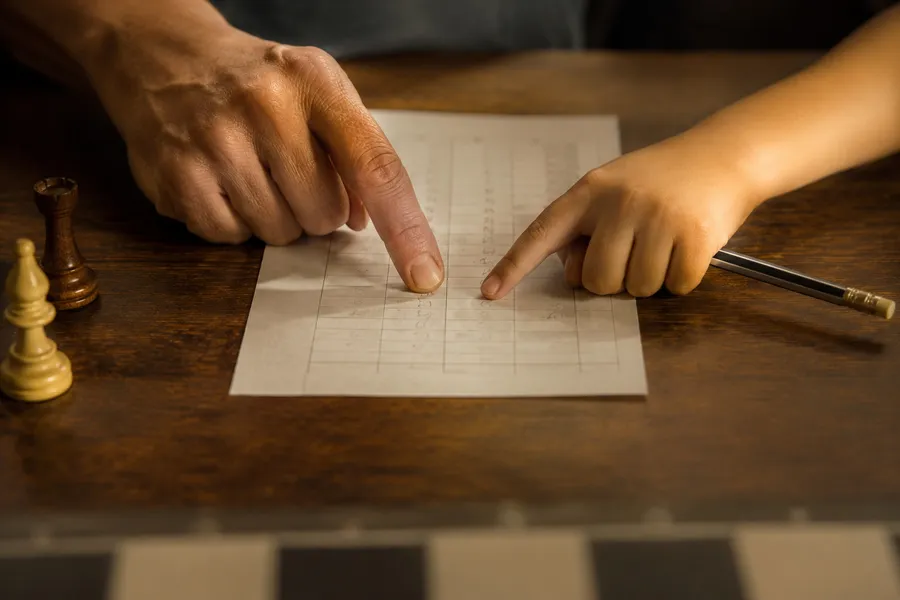
Confidence Through Review
Every game leaves evidence behind. Students learn to review what happened, find the turning point, and come back with a better plan instead of carrying the result as a label.
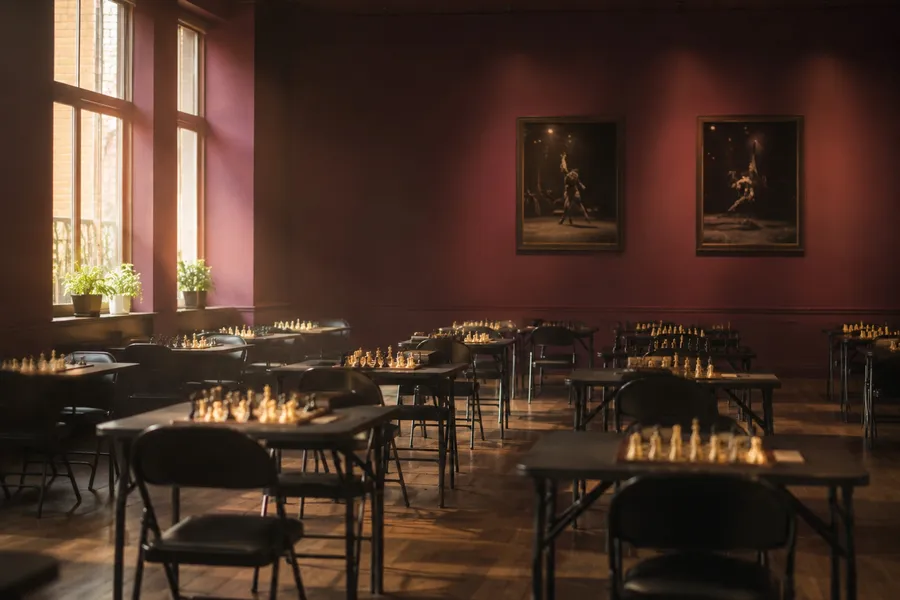
Tournament Mindset
Spotlight hosts chess tournament opportunities, including an annual event. We are working toward USCF-rated tournament capability; meanwhile students build the notation, clock, etiquette, and review habits that serious play requires.
How Students Progress
Beginners and experienced players train together. That is not a compromise; it is how chess communities work. A new student may be learning checkmate patterns while a returning player studies calculation, but both are practicing the same discipline: look carefully, choose a plan, and learn from the result.
Rules, piece movement, board coordinates, checkmate, stalemate, and the first habit of chess: pause before moving. New players get comfortable quickly, while experienced players use the same fundamentals to clean up careless mistakes.
Tactical puzzles, opening principles, simple endgames, clock habits, and guided games. Students begin to explain their thinking, not just their moves, which is where real chess growth starts.
Full games, notation, tournament habits, and post-game review. Wins teach confidence; losses teach precision. Either way, students leave with a next move for their own improvement.
Where We Train
Both campuses run the same weekly class at the same time. One batch per campus for now - we add more as interest and registrations grow, so tell us if the current time does not work for you.
Weekly Chess
A focused classroom setting for students across experience levels. Players work through puzzles, guided games, notation, and review at a pace matched to their current board vision.
Weekly Chess
A steady weekly chess environment for young players. Students sharpen tactics, play real games, and learn how to review their decisions without losing the joy of the game.
Your Coaches
Chess here is taught by volunteer coaches: rated club and tournament players who give their time to the program. They coach through positions and real game review rather than abstract theory, which is how they learned it themselves.
One coach runs the class at each campus, and they work with every child in the room rather than sorting students into rigid levels. You are welcome to meet the coach at your child's first class.
Enroll now and we will confirm your child's level, campus, and class time.
 Spotlight Academy